Are you eager to get into the field of business but haywire with from where to start? If yes, then you will agree to the fact that learning from the best is the best learning.
Every field has someone known as the best or some of the bests. Same lies in the field of business. Though the business community is often overshadowed by competitors like the Baniyas and the Gujaratis, but,the Sindhis particularly stand out for their chutzpah.
Who are the Sindhis?
The region of Sindh has experienced numerous invasions in the past, but the Sindhis sustained all of them. Sadly, the Partition of 1947 was a major strike upon the community. They had become stateless and had to migrate from their own ancient homeland.
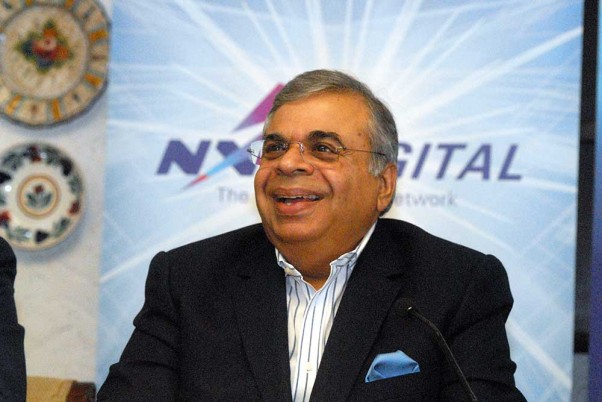
But their strong belief of “never-say-die” helped them adjust to whichever place they migrated to.They had to build themselves from scratch to get back their prosperity but only by being true to their business heritage, writes industrialist Ashok Hinduja, Chairman of the Hinduja Group of Companies.
Learning from the best!
If you want to get into the business community, Sindhis are the best sector to learn from. Their strategies of doing business can help you reach the zenith.
Here we reveal the seven business secrets of the Sindhis for you to get inspired on your business journey:
1. Money-Minded is Good:
After the Partition of 1947, Sindhis who were living in Mumbai (then Bombay) would do almost anything to make even a small amount of money.
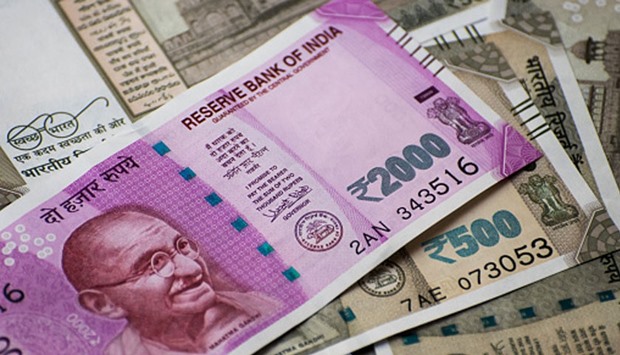
For instance: if shops around them sold sugar for ₹1 per kg in bags of 50 kg, Sindhi businessmen would buy the same and sell them at 99 paise per kg making the price 1 paise cheaper and this helped them sold hundreds of bags making a loss of 50 paise per 50 kg bag.
Confused? Why did they work so hard, to lose money? Carefully understanding, they actually made a net profit of 50 paise on every 50 kg bag of sugar, every time they sold an empty bag.They believe in sacrificing profit for large turnovers.
2. Never-Say-die
They have aconstant moving forward habit despite all hardships and geographical factors,and this helps them grow and reach the zenith of success.
3. Don’t Rent, Buy.
Sindhis buy their properties and never rent them. This practice has made many a family in the community not only rich today but also grow their business further.
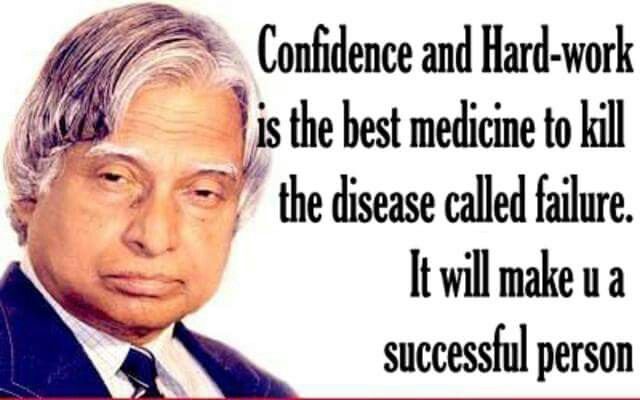
4. Confidence & Hardwork
Education hardly matters in the field of business for them, theaverage Sindhi conversions from small business operations to mega developmental projectswith ease because of their confidence and hardworking nature.
5. Pride of the Community
Their immense pride in being one with the communities have helped them succeed in business anywhere in the world.They give back in kind to the countriesthat have helped them reach where they are and earn millions, thus further growing their business aspects.
6. Where’s the Next Big Thing?
Sindhi’s intelligence can even get them out of situations that might make them bankrupt. This is the kind of smartness that is inherited by the Sindhis. Interesting, isn’t it?
7. Be Your Own Boss
Sindhis make their own rules and bend only if lies in their advantage. They fit in but they hold their own.Sindhis are known because they don’t just say but stand by it – the word is their bond. Commendable!
Interestingly, these seven secrets help the Sindhis to sniff out opportunities from any field.They are an inspiration and a learning for many new incoming business minded people.
FOR SOME PEOPLE -SCHOOLS ARE THE SOURCE OF EARNING
AND FOR SOME -SCHOOLS ARE THE SOURCE OF LEARNING
I know many people they don’t even get primary education and still deals in millions and on the other side some people they have graduate degree from a well known universities or colleges but struggling for a job in a small company.
INDIAN EDUCATION SYSTEM – GOOD OR BAD
The education system in India suffers from some serious lacunae. These include preference for good marks/grades over being knowledgeable, lack of encouragement for thinking out of box. Students are prescribed to give there full attention towards studies and refers to read only textbooks and help/guide books. Rigid and outdated syllabi/curriculum, heavily underpaid professors/teachers (bright minds stay away from this career; professors don’t show much zeal for teaching, they just ”go through” the motions), only a few colleges with good quality of education where you have to be in the top elite to gain admission besides there being a lack of passion for education in real sense (most students go for engineering/medicine on the advice of ”elders”!).
Facts and stats regarding Indian education system
•In India, just 11% of the children finishing school joins a college whereas in the US, this figure amounts to a whopping 83%.
As per the eleventh plan, to increase this enrolment level to 15%, India needs to invest approx. Rs. 22.5 billion but it has allotted only a fourth of the total needed.
•According to a study by the National Assessment and Accreditation Council, 90% of the colleges and 70% of the universities that the council graded were of middling or poor quality. The standard of school education has stagnated too. In rural India, there is no teaching activity on about 50% of the working days in the primary schools.
•There is an endemic shortage of teachers with even the IITs reporting a 20% to 30% shortfall in faculty. Indian universities, if one goes by average, revise their curricula only once in 5 to 10 years but by then they get defeated in both letter and spirit.
•Corruption is the by-word in higher education having become rampant and institutionalized due to over-regulation by the government and multiplicity of education agencies leading to what else but stagnation in this very vital sector of education.
•The lack of good institutions has seen cut-off percentages for entry into good colleges soar to almost impossible levels (at Delhi’s SRCC college, this percentage was as high as 98.75). There is an undue pressure to do well in the secondary board exams because of which the suicidal tendency has grown alarmingly.
•Owing to poor quality of education at home, Indian students now spend no less than $7000 million to go abroad and study in foreign universities. Still the government is adamant over its peculiar stance of not permitting foreign universities to set up shop in India.
We have almost done with the bad points of the Indian education system. And, to end on a bright note, almost 50% of the country’s population is below 25 years. Almost 10% of them or 120 million are between the ages of 18 and 23. Let them have both knowledge and skills; they could surely drive India’s competitive and entrepreneurial spirit and transform it into a major global power. Isn’t it a good ending to the bad side of Indian education scenario?
Ways to improve Indian education system
1. Effective Implementation of Education Laws:
Every citizen of India has been given a Fundamental Right to Education but it has not been so effective in India, this makes the citizens uninformed about their fundamental rights and duties. The government must work on creating more awareness on these rights and schemes, so that they can be used most effectively.
2. Betterment in Government Schools:
Now days it has become very important for the government schools to take a major step in reforming the prevalent education system as a majority of the Indianpopulation resides in rural and semi-urban areas. Various changes should be made in government schools such as the infrastructure, teachers, etc. Government schools must provide quality education to everyone regardless of one’s ability to pay. Teachers must be provided trainings.
3. Elimination of Reservation Criteria:
This is one topic which is controversial. Removal of the quota system will bring a major change and improvement in the education system. Due to the quota system there are so many students who don’t get chances for admission in nice government as well as private schools. Only children with poor economic conditions must be given basic education.
4. Technology Based Education:
Smart classes should be conducted in all schools rather than sole theoretical knowledge since this is the era of Technology. Teachers should be well acquainted with computers and must have a clear understanding of the subjects, being taught. Practical knowledge is the need of the hour because a child can retain better, what he sees and hears in his/ her memory rather than what he reads.
5. Health Education:
Health education is one of the most important areas which requires attention and improvement. Yoga and other workout programs should be included in our education system to help in inculcating good values and a healthy mind in the children. Public sanitation system should be improved and more awareness campaigns should be enforced.
Famous quotes by great personalities on education.
education is an important aspect of our lives, while some of us take it for granted, there are others who crave and struggle to get it.
From Aristotle to APJ Abdul Kalam, every famous personality has time and again stressed on the importance of education in our lives.
Listed below are 5 quotes of famous personalities on education.
Conclusion
Through the survey we have concluded that the number of males in the age group of 16-20 years were more towards about gaining knowledge and were not sure that if education is important to them or not. they also thought the education provided abroad is much better than the education provided in Delhi. These people are not able to practice and comprehend what is taught to them in the class. The students also think that the CBSE board is much better than the others and also the quality of education over here is very poor. As we talk about the difference in the syllabus of the CBSE and ICSE board, majority of the people have said that the syllabus prepared by the CBSE board is no where near the syllabus prepared by the ICSE board. They also think that the CBSE board is fair. The students have concluded that Disciple is the most important element that the high school should provide us with and the high school being English medium is the least important.When we talk about the survey that we took from the parents ageing between 35-40 we have concluded that the number of females have a mind set about gaining knowledge in high school. They also think that the school is able to make the students comprehend and practice in the class well and they think that their children should study in India rather than going abroad. They are averagely satisfied with education system and they might have a holistic perspective. As from our data we have figured out that the parents prefer the ICSE board rather than the CBSE board and they think that the understanding the subject is more important than scoring good grades. They think that the CBSE board is averagely unfair. The parents have concluded that Disciple is the most important element that the high school should provide us with and the high school being English medium is the least important.





 knowledge blog